Malibu, California · Quieter nights

Snoring treatment in Malibu — beyond earplugs

Snoring ranges from harmless noise to a nightly signal worth investigating. This page covers both ends — and where custom oral appliances fit. Review matched to the dental sleep medicine practice of Dr. Robert Perkins, DDS.

  • Free consultation
  • Office responds within the hour
  • No obligation at any step

Reviewed by Dr. Robert Perkins, DDS — Dental sleep medicine · Invisalign-certified provider · Malibu practice

Free · No obligation

Explore my snoring options

Takes about 30 seconds. The practice — never a call center — follows up personally.

Private and secure — your request goes directly to the Malibu practice.

Request received

Thank you — the office will reach out shortly, typically within the hour.

Content reviewed by Dr. Robert Perkins, DDS

Dental sleep medicine practice

Invisalign-certified provider

Malibu, California

Dental Sleep Medicine

When noise becomes a symptom

What is snoring treatment? Snoring treatment addresses the narrowed airway that creates sound during sleep. Position changes, habit adjustments, and custom oral appliances each target a different cause. The first step isn't a device, though — it's sorting ordinary snoring from the kind that signals obstructive sleep apnea, and that distinction belongs with a physician.

Sometimes snoring is just snoring. When the airway narrows enough to interrupt breathing itself, it may point toward obstructive sleep apnea — and that's where treatment gets real. A custom oral appliance, fitted by a dentist, can address both snoring and apnea by holding the jaw forward and the airway open during sleep — the American Academy of Dental Sleep Medicine describes oral appliance therapy as an effective treatment for both. The practice works alongside your physician, so the cause is settled before the solution is fitted — the same principle behind our guide to who oral appliance therapy actually suits .

  • Custom-fit — never a pharmacy mouthguard
  • Quiet, compact, and easy to travel with
  • Physician-coordinated, from cause to solution
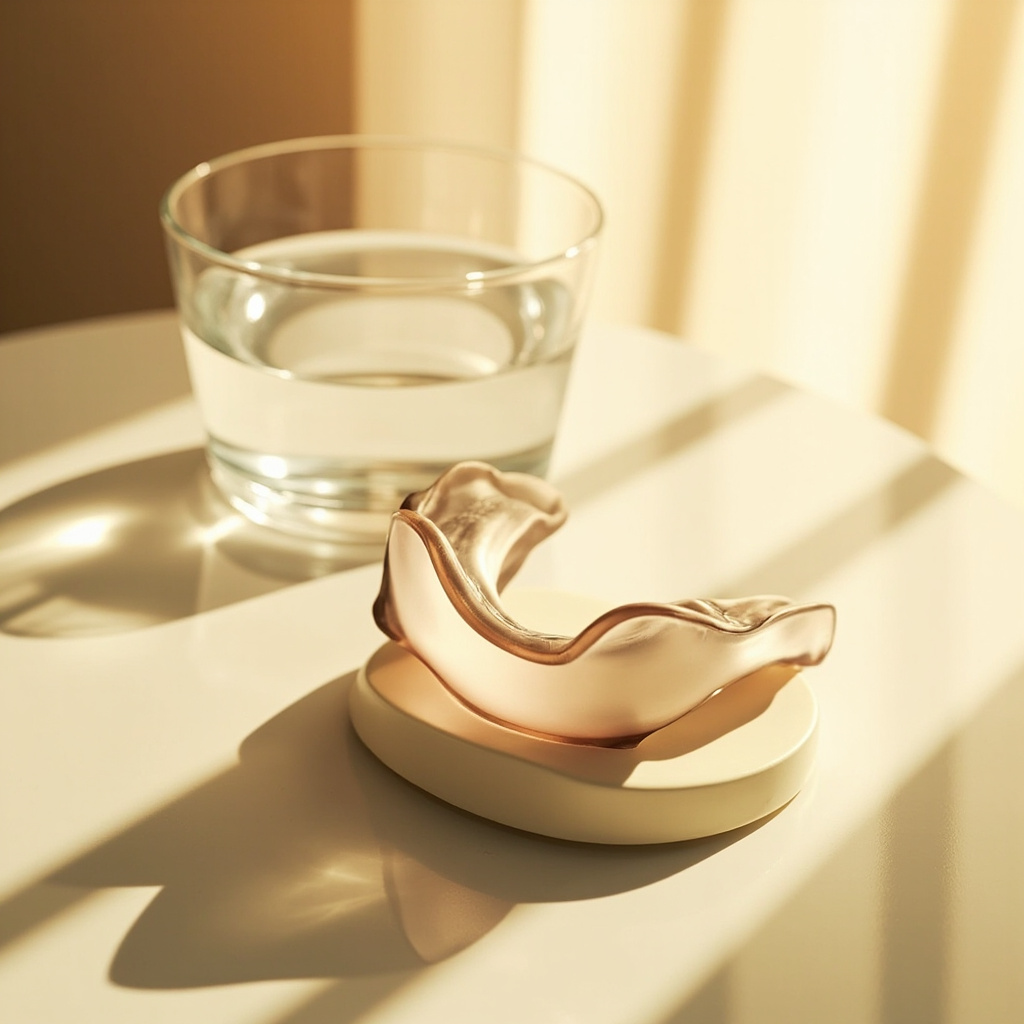
A peaceful sleep setting at dawn, evoking quiet, uninterrupted rest A custom oral appliance, precision-crafted for dental sleep medicine

The calm read

Most snoring isn't dangerous, and some of it is worth a closer look. The difference is a conversation — not a midnight panic.

Malibu Dental Match, on snoring

The cause

What actually causes snoring?

Snoring is the sound of air moving through a narrowed passage. During sleep the muscles of the throat relax, and the soft tissue around the airway can drop inward — the narrower the gap, the faster the air moves, and the more the tissue vibrates. That is the noise. Why the passage narrows is the part that differs from person to person.

The common contributors are unglamorous and mostly familiar: sleeping on your back, alcohol or sedatives close to bedtime, nasal congestion, and the shape of your own anatomy — jaw position, tongue size, and palate. Weight plays a role for some people and very little for others, which is why a thinner person can snore just as loudly as anyone else. None of these are diagnoses; they are the details a clinician uses to tell one kind of snoring from another.

  • Back sleeping — gravity lets the tongue and soft palate fall inward
  • Alcohol or sedatives near bedtime, which relax the throat further
  • Nasal congestion or a deviated septum narrowing the front of the airway
  • Anatomy — jaw position, tongue size, and palate shape

The appliance

Does a custom oral appliance help snoring?

For many people, yes — and it is often the first thing that changes, sometimes within the first nights. The appliance works by holding the lower jaw gently forward, which pulls the tongue away from the back of the throat and widens the space air travels through. It is the same mechanism that makes it useful for obstructive sleep apnea, not a separate trick.

The important qualifier is why you're snoring. If the sound is a marker of apnea, then quieting the noise without addressing the breathing would be the wrong win — and only a physician can settle that question. For confirmed mild-to-moderate obstructive sleep apnea, the National Institutes of Health (NHLBI) describes a prescribed oral device, custom-fitted by a dentist or orthodontist, as one of the established treatment paths. Where CPAP is already working, nothing needs to change — the decision belongs with your care team, and the CPAP vs. oral appliance comparison sets out how that call gets made.

  • Custom-fit to your anatomy — never a boil-and-bite or pharmacy guard
  • Adjustable, so the fit is refined across follow-up visits
  • Coordinated with your physician, so the cause is treated, not just the sound

If a custom appliance is the direction, the sleep apnea dentist in Malibu page walks through what the fitting and follow-up actually involve.

Worth mentioning

When does snoring signal something more?

Most of the details that raise the stakes aren't visible to the person doing the snoring — which is why a bed partner's account is genuinely useful. These three patterns are the ones worth passing on.

Witnessed pauses

A partner who notices breathing that stops, catches, or gasps mid-sleep has noticed something worth raising with a physician.

Tired days, 'full' nights

Sleeping a full night and still waking drained is the classic mismatch — exactly the kind of detail worth raising with a physician.

Mornings that feel off

Dry mouth, dull headaches, grogginess that needs coffee to fix — mild on their own, more meaningful alongside snoring.

Without a machine

Can snoring be treated without a CPAP machine?

Often, yes — but which option is right depends on what is causing the snoring, and severity sets the frame. The everyday levers cost nothing: side sleeping, moving alcohol earlier in the evening, and treating nasal congestion. A custom oral appliance is the other non-machine path. It is still a device, but there is no mask, no hose, and no power outlet — which is precisely why people who couldn't settle into CPAP ask about it.

What none of these can do is diagnose. Snoring is a symptom, and the reason for it decides the treatment — so the honest sequence is a physician's assessment first, then the option that fits. For moderate-to-severe obstructive sleep apnea, CPAP remains the standard first-line therapy; appliance therapy is where the evidence supports an alternative, and where tolerance is the barrier. If a physician has already recommended a machine and it isn't working for you, that is a conversation worth having rather than a corner to sit in.

Because the sound and the breathing are separate questions, the details in the candidacy guide are worth reading before any device is chosen — and regular exams and cleanings keep the teeth and bite healthy enough to wear one comfortably.

Answers, plainly

Snoring, plainly

The questions partners tend to ask first.

Reviewed by Dr. Robert Perkins, DDS

Dental sleep medicine · Invisalign-certified provider · Malibu practice


Where relevant, this page references guidance from the American Dental Association, the American Academy of Dental Sleep Medicine, the American Sleep Apnea Association, and the Sleep Foundation.

Is snoring always a sign of sleep apnea?

No — primary snoring exists, and plenty of it comes from sleep position, alcohol near bedtime, or simple anatomy. The distinction matters, though, because obstructive sleep apnea carries more weight. A physician can tell you which conversation you're having.

Are pharmacy anti-snoring guards the same as oral appliance therapy?

They're related the way a bandage is related to a treatment plan. Over-the-counter guards are generic and unadjusted; oral appliance therapy is custom-fit, adjustable, and supervised by a dentist who tracks your response over time.

When should I talk to a doctor about snoring?

Whenever it's loud, persistent, and paired with daytime fatigue — and without waiting if anyone has witnessed you stop breathing during sleep. Those details are exactly what physicians and sleep studies are for.

Does sleeping position really change snoring?

Position can matter a great deal for some people and barely at all for others. Sleeping on your back lets gravity pull the tongue and soft palate inward, narrowing the airway, so side sleeping often quiets things. It isn't a treatment for apnea, though — if a physician has confirmed obstructive sleep apnea, positioning alone shouldn't be the whole plan.

Do nasal strips and sprays help snoring?

They can help when the narrowing is in the nose — congestion, allergies, or a deviated septum — because air that can't move freely through the nose is pulled harder through the throat. If the narrowing sits further back, at the tongue and soft palate, a strip on the outside of the nose won't reach it. Which is why the answer depends on where your airway narrows, and that's worth having examined rather than guessed at.

If I treat my snoring, does it stay treated?

Treatment isn't a cure, and it isn't a one-time fix. An oral appliance holds the jaw forward only while it's worn, so snoring typically returns if you stop using it. The fit also drifts over time as the appliance wears and your bite shifts, which is why follow-up visits and periodic refitting are part of the plan rather than an afterthought.

Ready when you are

Quieter nights start with one short form

Tell us it's sleep care. The office calls you — typically within the hour — and your free consultation sorts signal from noise.

Free · No obligation

Request my snoring consult

Takes about 30 seconds. The practice — never a call center — follows up personally.

Private and secure — your request goes directly to the Malibu practice.

Request received

Thank you — the office will reach out shortly, typically within the hour.

Request My Free Consultation